

Sleep and Fertility are more connected than most people expect. Not because sleep is a “magic fix,” but because sleep helps regulate the hormones, stress signals, and daily rhythms that support reproductive health in both women and men.
Informational only. Not medical advice.
Table of Contents
TL;DR
- Sleep and Fertility are connected through hormone timing and stress regulation.
- Short, irregular, or low-quality sleep may affect reproductive hormone patterns and overall reproductive wellbeing.
- Evidence is growing for both women and men: recent studies link sleep quality to fertility-related outcomes, including semen parameters in men.
- Best first step: sleep consistency + sleep quality (routine, light, stress wind-down, and smart caffeine/alcohol timing).
- Trackers and sleep aids can help some people, but avoid products that promise guaranteed “fertility boosts.”
- Sleep is one piece of a complex puzzle—if you’re concerned, talk with a healthcare professional.
Why Sleep and Fertility Are Linked
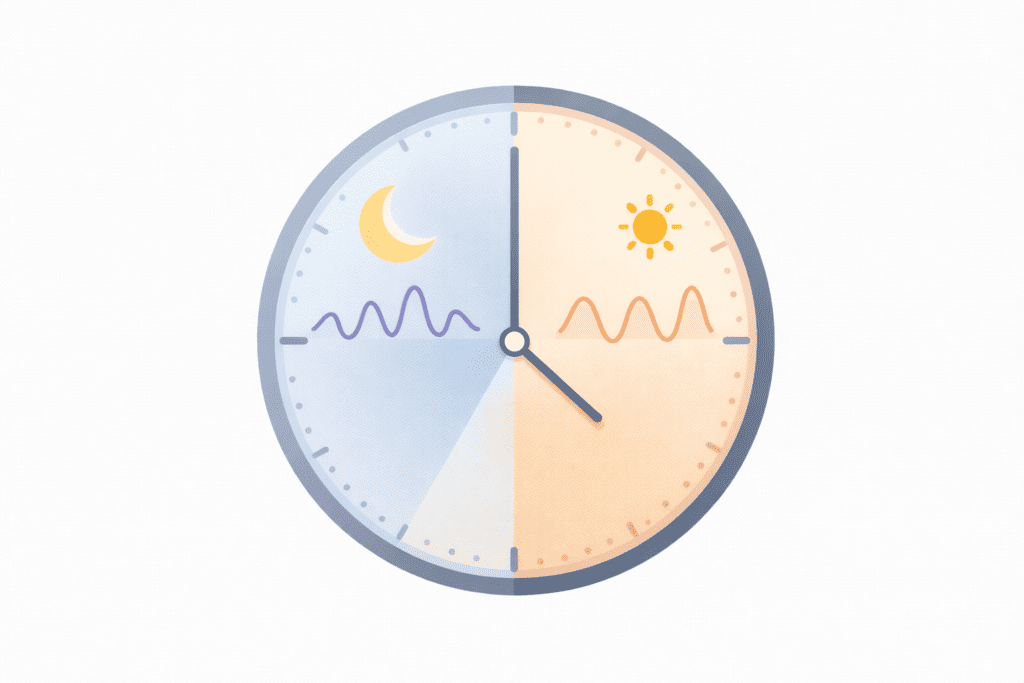
Think of your body like an orchestra. Hormones are the instruments, and your daily rhythm (your circadian clock) is the conductor. Sleep helps that conductor stay steady.
Here’s how Sleep and Fertility often connect in plain language:
- Hormone timing: Key reproductive hormones follow daily and monthly patterns. When sleep is chaotic, the timing can drift.
- Stress and the nervous system: High stress and poor sleep can keep the body in “alert mode,” which may interfere with normal hormone signaling.
- Inflammation and recovery: Sleep is when your body does a lot of repair work. Poor sleep can make recovery harder, and the body may feel less “balanced” overall.
Important note: this doesn’t mean poor sleep causes infertility. It means sleep can be a modifiable factor that supports (or strains) the systems involved in reproduction—alongside age, medical conditions, nutrition, exercise, genetics, and more.
What’s New (Late 2024–2025)
In the last year or so, research has become more specific. Instead of only asking “how many hours do you sleep?”, studies are looking at sleep quality, timing, and disruption.
A 2024 systematic review reported that infertile women often report poorer sleep quality and that sleep disturbances are associated with infertility-related outcomes (association, not proof of cause).
On the male side, 2025 research in infertility settings has reported links between poorer sleep quality and semen parameters, highlighting sleep as a potentially modifiable contributor to male reproductive health. PMC+1
Another big theme is circadian disruption (like rotating shift work). A 2025 review summarizes evidence that night shift work and circadian disruption can affect women’s reproductive cycles and fertility-related outcomes, though effects differ across individuals. Frontiers
And on the “next steps” side, the World Health Organization released its first global guideline on infertility (Nov 2025), emphasizing infertility as a major public health issue and supporting evidence-based prevention, diagnosis, and treatment approaches. Organização Mundial da Saúde+1
The Practical Breakdown
These are practical actions that support Sleep and Fertility without turning your life upside down. You don’t need to do all of them. Pick 2–3 for the next two weeks.
1) Keep your sleep schedule steady
Going to bed and waking up around the same time most days helps regulate circadian rhythms (your internal clock). Consistency is one of the simplest “wins” for Sleep and Fertility.
Quick win: set a realistic wake time you can keep most days, then shift bedtime gradually.
2) Build a calm pre-sleep routine
A calm routine tells your body, “It’s safe to power down.” This matters because stress can affect both sleep and hormone regulation.
Try a simple 20–30 minute routine:
- dim lights
- light stretching or a warm shower
- journaling (“brain dump”)
- slow breathing (long exhale)
3) Protect sleep quality (not just quantity)
Sleep and Fertility aren’t only about hours. Interrupted sleep can feel like “enough hours” but still not be restorative.
Quick win checklist:
- cool room
- dark room
- low noise (or white noise)
- phone out of reach
4) Be smart with caffeine and alcohol
Caffeine late in the day can delay sleep, and alcohol can reduce sleep quality even if it makes you sleepy at first.
Quick win: test “no caffeine after lunch” for 7–10 days. If you drink alcohol, avoid it close to bedtime.
5) Move your body most days (moderate is enough)
Regular movement supports sleep quality and stress regulation—both helpful for Sleep and Fertility. It doesn’t have to be intense. Walking counts.
6) Eat in a way that supports sleep
Heavy meals right before bed can make sleep restless for some people. If you’re hungry late, go lighter.
Quick win: finish bigger meals earlier; keep late snacks simple.
If digestion issues or late meals affect how well you sleep, you may also like Sleep and Gut Health: Gut, Mood & Recovery, which breaks down how sleep timing and gut comfort can influence recovery and daily wellbeing.
7) Don’t let sleep tracking become stress
Tracking can be useful, but obsession can backfire (“I only got 6h 42m—now I’m doomed!”). Sleep and Fertility do better with calm consistency than perfection.

Shift Work, Jet Lag, and Irregular Schedules
If your schedule is irregular, you’re not “doing it wrong”—you’re dealing with a harder starting point.
Research reviews continue to highlight shift work as a potential disruptor of reproductive rhythms in some people.
If this is you, focus on what you can control:
- Keep a consistent “anchor sleep” block (even if it’s shorter) on most days
- Use light strategically (bright light when you need to be alert; low light when winding down)
- Protect your sleep environment during daytime sleep (blackout curtains, earplugs/white noise)
- Talk with a clinician if shift work is long-term and you’re trying to conceive
These steps won’t make shift work “ideal,” but they can make Sleep and Fertility support more realistic.
If You’re Considering Trackers, Apps, or Sleep Aids
Disclosure: Some links on lifewith.health may be affiliate links, at no extra cost to you.
This is where people get sold the dream: “buy this device and it will boost fertility.” Be cautious.
Trackers and fertility wearables
Wearables can be helpful for spotting patterns (sleep timing, temperature trends, cycle clues). The American Society for Reproductive Medicine has discussed how wearable health devices show promise for detecting cycle stages—useful, but not perfect, and not a substitute for medical care. Sociedade Americana de Medicina Reprodutiva
Good use: patterns, routine support, and awareness.
Bad use: diagnosing yourself or treating the numbers like a guarantee.
What to look for
- Clear explanation of what the product does (and what it doesn’t do)
- Transparent data presentation (no “mystery scores”)
- No claims of guaranteed conception outcomes
- Comfortable design that doesn’t disrupt sleep
Sleep aids and supplements
If you’re considering sleep aids, treat them as short-term tools, not a fertility strategy. Sleep and Fertility benefit most from routine, light habits, stress reduction, and addressing underlying sleep problems.
If you’re trying to conceive, ask a healthcare professional before starting any supplement—especially if you’re already taking medications.
When to Seek Professional Support
If you’re actively trying to conceive and worried, you don’t have to guess alone.
A commonly cited guideline is to seek an infertility evaluation after 12 months of trying if under 35, after 6 months if 35 or older, and sooner if there are known factors that could affect fertility.
Also, the WHO’s 2025 infertility guideline highlights the importance of evidence-based care and improving access to fertility support.
FAQ
Q1: Can poor sleep cause infertility?
Poor sleep can affect hormone regulation and stress physiology, which are relevant to reproductive function. But infertility is usually multi-factorial. Sleep and Fertility are linked, yet sleep is typically one part of a bigger picture.
Q2: How much sleep is recommended when trying to conceive?
Many adults do best with roughly 7–9 hours of sleep, but individual needs vary. What often matters most for Sleep and Fertility is consistent timing and good quality sleep.
Q3: Are naps helpful or harmful for sleep-related fertility health?
Short naps can help if you’re underslept. But long or late naps can interfere with nighttime sleep. If naps push bedtime later, they may work against Sleep and Fertility goals.
Q4: Does shift work impact fertility through sleep disruption?
It can for some people. Evidence reviews suggest circadian disruption from night shift work may affect reproductive outcomes, though not everyone is impacted the same way.
Q5: Should sleep supplements or medications be used to improve fertility?
Use caution. Sleep aids shouldn’t be used as a primary fertility strategy. If you’re considering them, talk with a healthcare professional—especially if you’re trying to conceive.
Q6: Can a wearable predict fertility outcomes?
Wearables can help track patterns, but they can’t guarantee outcomes. ASRM notes promise in wearables for detecting cycle stages, but they’re not a replacement for medical evaluation or individualized guidance.
Conclusion
Sleep and Fertility are connected in a practical, everyday way: sleep supports hormone timing, stress resilience, and recovery—systems that matter for reproductive health in both men and women. The best approach isn’t chasing perfection. It’s building steady sleep routines, reducing late-night stimulation, and protecting sleep quality as a consistent habit.
If you’re trying to conceive, treat sleep as one strong pillar—along with nutrition, movement, medical care when needed, and emotional support. And if concerns are persistent, professional guidance can help you move forward with clarity.