Are Wellness Trends Making Us Miss True Health?
Table of Contents
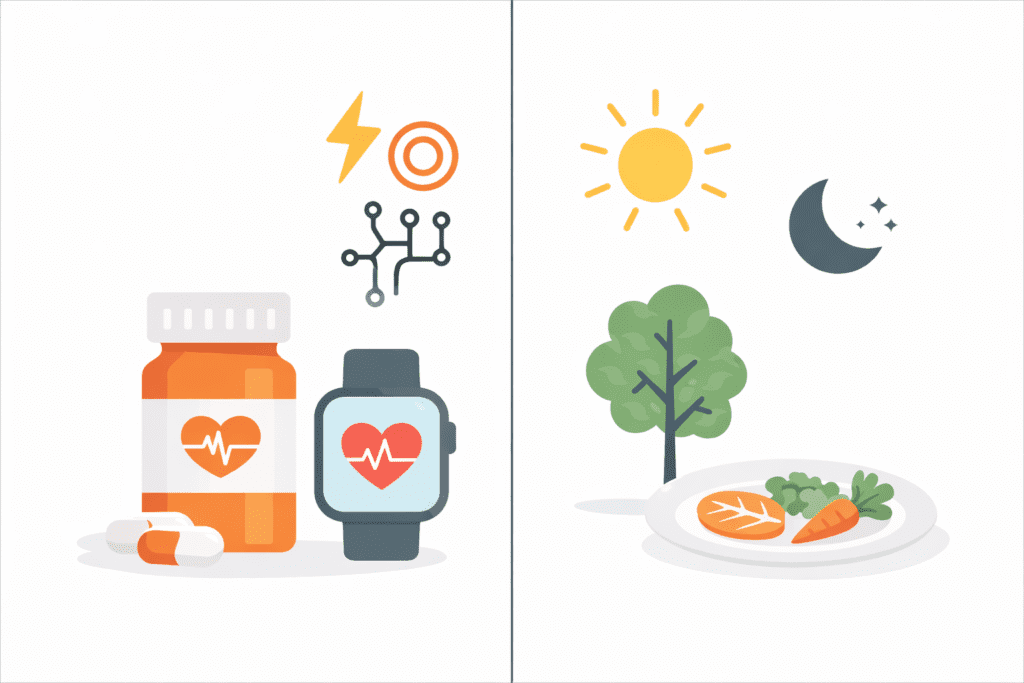
The wellness world moves fast. One week it’s a new supplement. Next week it’s a “biohack” routine. Then it’s a wearable that promises to “optimize” your sleep, stress, and metabolism—if you’ll just follow the numbers.
And somehow, the basics—sunlight, nature, sleep, movement, real food, and less screen time—get pushed to the side.
Here’s the uncomfortable question worth asking: Are we chasing “longevity” while ignoring the quality of the life we’re trying to extend?
Informational only. Not medical advice.
Why Wellness Trends Feel So Tempting
Wellness trends are popular because they’re simple, exciting, and measurable:
- A pill feels easier than a consistent bedtime.
- A gadget feels easier than daily movement.
- A “cleanse” feels faster than improving your meals one step at a time.
But the deeper pull is emotional: trends sell certainty. Do this, get that. In a world where health is messy and personal, certainty is a powerful product.
There’s also an identity layer: If I’m doing this, I’m the kind of person who has it together. That can be motivating—until the “together” part depends on constantly buying the next fix.
The Core Problem: We’re Optimizing the Extras While Skipping the Essentials

Many people are doing “wellness” but still feel:
- tired in the morning
- anxious or foggy during the day
- run down after small stress
- stuck in a cycle of motivation → burnout → restart
Sometimes it’s not because someone picked the “wrong trend.” It’s because the foundation is missing.
Foundations that often matter more than the latest trend
- Daily light exposure (especially earlier in the day)
- Time outdoors / nature (even short walks)
- Lower screen time, especially at night
- Consistent sleep and wake time
- Regular movement you can repeat
- Simple, balanced meals most days
None of these are flashy. But they’re the conditions your body recognizes as “safe and stable.”
Longevity Without Quality Isn’t the Win
We talk a lot about living longer. But most people don’t actually want “more years” in the abstract. They want:
- waking up with energy
- thinking clearly
- moving with less friction (as much as possible)
- enjoying relationships and ordinary days
More years don’t automatically mean better years. Health isn’t just survival—it’s function, clarity, and freedom.
Where Trends Help (and Where They Hurt)
Not all trends are bad. Some can be useful tools—if they support the basics instead of replacing them.
Helpful trend use
- A wearable that helps you notice patterns (without turning your life into a scoreboard)
- A meditation app that gets you practicing, not just subscribing
- A supplement used carefully when there’s a clear gap and realistic expectations
Trend traps
- “Miracle cure” marketing
- “One product fixes everything”
- Complex routines built on poor sleep and high stress
- Spending money to avoid doing the basics
A quick filter that works: Is this helping me do the basics more consistently—or giving me permission to skip them?
What True Health Looks Like (A More Real-Life Definition)
True health isn’t perfection. It’s resilience—how well you bounce back.
| Area | What “true health” tends to include |
|---|---|
| Body | steady energy, regular movement, decent sleep, basic nutrition |
| Mind | calmer stress response, clearer thinking, fewer “crash days” |
| Lifestyle | routines you can maintain, not extreme plans you quit |
| Environment | sunlight, nature, supportive relationships, less digital overload |
A Reality Check About Healthcare (Without Blaming Doctors)

A real frustration people mention: sometimes visits focus on symptoms, not root causes like sleep, stress, food quality, and daily habits.
To be fair, clinicians often have limited time, and urgent issues must be treated first. Still, you can advocate for yourself by asking better questions:
Good questions to bring to a visit
- “Could sleep or stress be contributing to this?”
- “What lifestyle changes should I try first?”
- “What’s a realistic plan I can stick to for 2–4 weeks?”
- “Are there warning signs that mean I should test or follow up sooner?”
That keeps things respectful—and still points toward the roots.
A Personal-Style Example (Simple, Not Extreme)
Many people have never experienced what “feeling healthy” truly feels like—so they assume low energy is normal.
A common turning point is when someone changes one basic habit and notices a real difference. For example:
- swapping a sugary/ultra-processed breakfast for a more balanced meal with enough protein and fiber
- waking up less groggy
- feeling steadier in the morning instead of crashing
Here’s the practical logic (the part marketers rarely explain plainly):
- Situation: Busy mornings + convenient food = meals that don’t keep you steady.
- Problem: Energy swings create cravings, irritability, and more stress.
- Implication: The “fix” becomes more caffeine, more snacking, more supplements—more chasing.
- Need–Payoff: When breakfast (and overall protein intake) is stable, everything else—mood, focus, training consistency—gets easier.
And yes: for adults, protein adequacy matters. It’s one of the least “sexy” health moves and one of the most effective.
Optional resource: Advanced Memory Formula. If you decide to purchase, using our link supports our work at no extra cost to you. For safety, double-check you’re on the official product page (look for advancedbionutritionals.com in the address bar).
Link:
Advanced Memory Formula: https://lifewith.health/go/advanced-memory-muscle
Practical Steps: Back to the Basics (A Simple Reset Plan)
If you want the “true health” version of wellness, try this 7-day reset—no complicated rules:
1) Get light early
Spend 5–15 minutes outside in the morning if possible.
2) Spend time in nature
Even a short walk outside counts.
3) Reduce screens at night
Pick a “screen off” buffer (even 20–30 minutes helps).
4) Protect sleep
Same wake time most days. Aim for a calmer wind-down.
5) Move daily
Walking, stretching, or any activity you’ll actually repeat.
6) Keep food simple
Mostly real foods, regular meals, and enough protein/fiber so you feel stable—not swingy.
A note for people who struggle with protein consistency: If you’re already doing the basics and still find it hard to hit protein targets (busy schedule, low appetite early, or you’re trying to support healthy aging and recovery), some adults choose targeted amino acid support as a convenience tool—not a replacement for food.
Disclosure: This article contains affiliate links. If you purchase through them, we may earn a commission at no extra cost to you.
Optional read: Advanced Memory Formula
Quick Comparison Table: Trends vs. Foundations
| Category | Trend-Chasing | Foundation-First |
|---|---|---|
| Focus | fast results | steady improvement |
| Effort | bursts of intensity | consistent routines |
| Cost | often expensive | often low-cost |
| Stress | can increase anxiety | usually reduces it |
| Outcome | unpredictable | more reliable over time |
Conclusion: The Best “Hack” Is Being Consistent
Wellness trends aren’t automatically bad. They become a problem when they distract you from the essentials that create real health.
If you want better days—not just more days—start here: sunlight, nature, sleep, movement, less screen time, and simple meals. Then add extras only if they genuinely support those pillars.
True health the ability to wake up and feel like your life is working.
And if you’re at the stage where your basics are getting consistent and you want a “helper” that fits into real life, consider tools that reduce friction—like meal planning, simple routines, or (when appropriate) a carefully chosen nutrition add-on such as Advanced Amino Acids.
Informational only. Not medical advice. If you’re under 18, pregnant, nursing, have a medical condition, or take medications, talk with a qualified health professional (and a parent/guardian if you’re a teen) before using supplements.