
Table of Contents
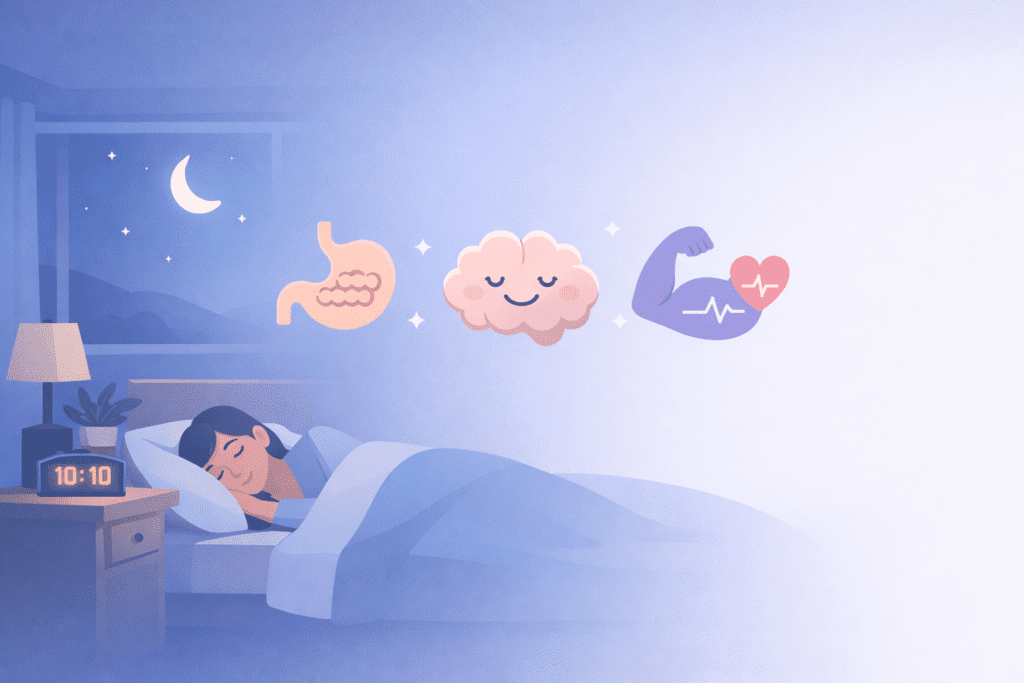
Sleep and Gut Health are tightly connected—and when sleep is short, irregular, or low-quality, it can show up as digestive discomfort, mood volatility, and slower recovery. This article keeps it simple: what the connection looks like, what you can do about it, and what to watch for if you’re tempted by “sleep + gut” products.
Informational only. Not medical advice.
TL;DR
Sleep and Gut Health work like a feedback loop. When sleep is disrupted, your gut environment and stress response can become less steady, and that can affect mood and recovery. The best approach is still the basics: consistent sleep timing, smart light habits, caffeine timing, meal timing, and a supportive sleep setup—not quick fixes. If you do consider supplements, be extra cautious with quality, labeling, and exaggerated claims (especially for teens).
What’s New (and Why People Keep Missing It)
A lot of wellness advice treats sleep like a bonus feature—nice if you can get it, optional if you’re busy. But the emerging picture is that sleep behaves more like a central coordinator: it helps “time” digestion, immune readiness, and the body’s stress signals.
The other big shift is focus on consistency, not just “hours.” People can sleep 8 hours and still feel off if their schedule swings dramatically across the week. For Sleep and Gut Health, those swings can matter because both digestion and mood are heavily influenced by circadian rhythm patterns (your internal clock).
If you want a solid, mainstream baseline on sleep habits (without internet chaos), the CDC’s overview is a reliable starting point: CDC – About Sleep: https://www.cdc.gov/sleep/about/index.html
1) Sleep and Gut Health + Gut Microbiome: The Two-Way Street
Your gut microbes don’t live on a human calendar—but you do. Sleep helps regulate circadian rhythms that influence digestion, immune activity, and inflammatory signaling, all of which shape the gut environment.
What this looks like in real life
- When your sleep is inconsistent, your appetite cues can get weird (more cravings, less “I’m full” clarity).
- Late nights can push meals later, which can affect digestion and how rested you feel.
- Stress + poor sleep can amplify “gut feelings” like bloating, irregularity, or discomfort.
The helpful mindset here:
Sleep and Gut Health don’t need perfection—just fewer extremes. If your sleep timing swings wildly (late nights on weekends, early wake-ups on weekdays), your gut may have a harder time staying predictable. A steadier schedule is often the simplest lever.
2) Mood + Sleep: Why the Gut–Brain Axis Matters
If you feel emotionally “thin-skinned” after bad sleep, that’s common. It isn’t only about being tired—sleep changes how your brain handles stress signals.
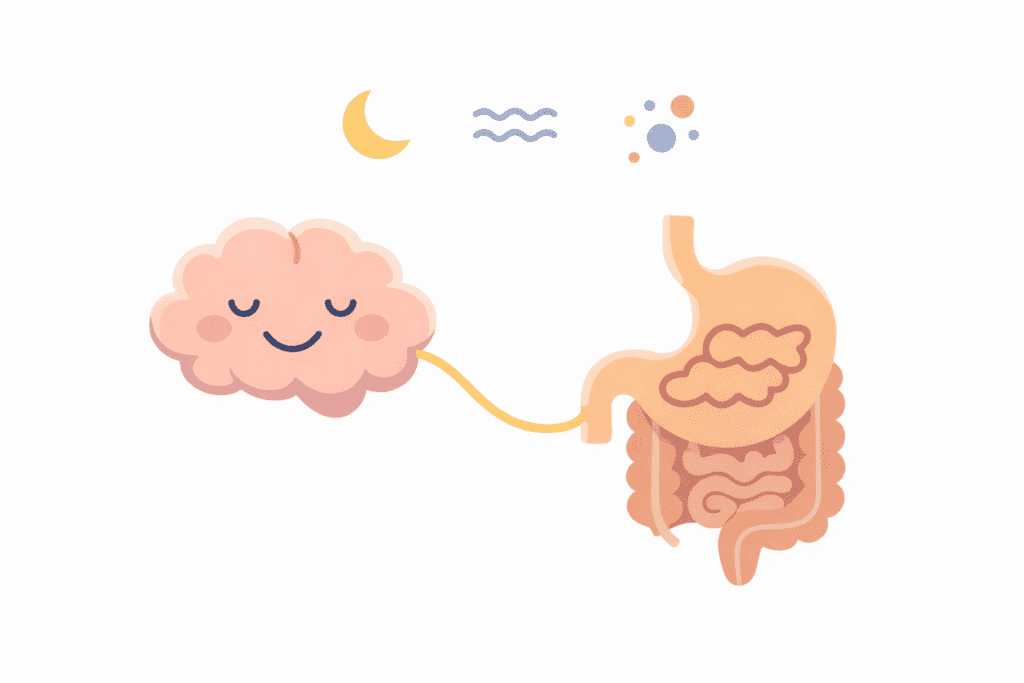
Now add the gut–brain axis: the gut and brain communicate through multiple channels (nervous system, immune signals, and chemical messengers). This doesn’t mean your gut is “controlling” your mood, but it does mean the gut can be part of the background noise or stability you feel day to day.
A practical way to think about it
- Poor sleep → bigger stress reaction to small problems
- Bigger stress reaction → more tension in the body (including the gut)
- More gut discomfort → harder to relax and fall asleep
That loop is why Sleep and Gut Health are often discussed together in wellness spaces. It’s not trendy; it’s just a pattern many people recognize when they start tracking how they feel.

Optional resource: Advanced Memory Formula. If you decide to purchase, using our link supports our work at no extra cost to you. For safety, double-check you’re on the official product page (look for advancedbionutritionals.com in the address bar).
Link:
Advanced Amino Acid: https://lifewith.health/go/advanced-amino-acid
3) Recovery: Where Sleep Quietly Does Its Best Work
Recovery isn’t only what happens between workouts. It’s also the nightly repair work that supports immune resilience, muscle recovery, and nervous system reset.
When sleep is poor, people often notice:
- soreness lasts longer
- motivation drops
- workouts feel harder than usual
- they get run-down more easily
Sleep and Gut Health both sit inside recovery because digestion and inflammation can influence how “ready” you feel. If your stomach is off and your sleep is off, your body is basically trying to perform with one hand tied behind its back.
Simple rule that works:
If you’re pushing training, school, or stress hard, protect sleep like it’s part of your plan—not something you “earn” later.
The Practical Breakdown
These are the habits with the best effort-to-impact ratio. None are magical. Together, they’re powerful.
A) Prioritize a consistent schedule
Aim for similar bed and wake times most days. Consistency supports your internal clock, and that clock influences digestion and mood regulation—key pieces of Sleep and Gut Health.
Quick win: pick a steady wake time and adjust bedtime gradually.
B) Reduce light + stimulation before bed
Bright light and scroll-heavy content can keep your brain in “day mode.”
Quick win: last 30–60 minutes = dimmer lighting + calmer activities.
(If you want official, simple guidance: https://www.cdc.gov/sleep/about/index.html)
C) Watch caffeine timing
If you’re sensitive, caffeine later in the day can make sleep lighter or push your bedtime back—especially when Insomnia and Anxiety are already making your nervous system feel “on.” A simple experiment is often the fastest way to learn what your body tolerates.
Quick win: try “no caffeine after lunch” for 7–10 days and track changes in how long it takes you to fall asleep, how often you wake up, and how you feel in the morning. For more context on how this fits into the bigger sleep–stress loop, see our guide: Insomnia and Anxiety: Signs, Habits, and Support
D) Don’t eat a heavy meal right before bed
Late heavy meals can make sleep feel restless and digestion noisier.
Quick win: finish bigger meals a few hours before bed; keep late snacks light.
E) Exercise—but don’t “punish” yourself with it
Regular movement usually supports sleep quality, but very late intense workouts can keep some people wired.
Quick win: move hard sessions earlier if late workouts affect your sleep.
F) Protect the sleep environment
Your room doesn’t need to look like a spa. It just needs to support sleep.
Quick win: cooler temp, darker room, less noise.
If You’re Considering Sleep Aids or “Sleep + Gut” Products
Supplements can be useful in specific situations, but they’re not a replacement for habits. Sleep and Gut Health improve most reliably when the foundation is strong: schedule, light, caffeine, meal timing, and stress management.
What to look for
- Clear ingredient list with exact amounts (avoid vague blends)
- Third-party testing or quality certification (when available)
- Claims that sound realistic (support, not “cure”)
Red flags
- “Miracle cure” promises for sleep, mood, or gut health
- No dosage transparency
- “Replace your sleep habits” marketing
Melatonin: quick reality check
If you’re researching melatonin, use a reputable overview like the NIH NCCIH page first:
NIH NCCIH – Melatonin: What You Need To Know: https://www.nccih.nih.gov/health/melatonin-what-you-need-to-know
For teens: involve a parent/guardian and a qualified health professional before using supplements. Sleep issues that persist are worth taking seriously.
FAQ
1) How exactly does sleep influence gut health?
Sleep helps regulate circadian rhythms and immune activity that shape the gut environment. That’s why Sleep and Gut Health often move together—when one is off, the other may feel less stable.
2) Can poor sleep cause mood changes through the gut?
Possibly. The gut–brain axis is one pathway that can influence stress and emotional regulation. Poor sleep can amplify stress responses, and gut discomfort can make sleep harder—so it can become a loop.
3) Should I focus on sleep or diet first?
They reinforce each other. If you want one starting point, stabilize sleep timing first. Better sleep often improves decision-making and appetite cues, which can make diet changes easier.
4) Are sleep supplements helpful for recovery?
Sometimes, but they’re not the core driver. Recovery improves most when sleep is consistent and deep enough. If you consider supplements, prioritize safety, quality, and realistic expectations.
5) How can I track whether sleep is helping my recovery?
Watch a few simple signals for 2–3 weeks:
- morning energy
- mood steadiness
- soreness duration
- workout performance or motivation
Wearables can help, but how you function day-to-day matters most.
6) Are sleep supplements safe?
It depends on the ingredient, dose, and product quality. If you’re under 18, consult with a caregiver and a healthcare professional before trying supplements.
Conclusion: Sleep Is the Foundation
When people think about gut health, mood, or recovery, they often jump to food plans, training tweaks, or the newest “sleep support” product. But the most reliable upgrade is usually simpler: protect your sleep.
If sleep is short, inconsistent, or constantly interrupted, your body has a harder time keeping key systems in sync—digestion, stress response, and the nightly repair work that helps you bounce back. When you build steady routines (consistent wake time, calmer evenings, smarter caffeine timing, and a sleep-friendly room), you’re giving Sleep and Gut Health a stronger baseline—and making mood and recovery easier to support.